'/%3e%3c/mask%3e%3cg%20mask='url(%23mask0_3045_12)'%3e%3crect%20width='22'%20height='22'%20fill='%23404D63'/%3e%3c/g%3e%3cdefs%3e%3cpattern%20id='pattern0_3045_12'%20patternContentUnits='objectBoundingBox'%20width='1'%20height='1'%3e%3cuse%20xlink:href='%23image0_3045_12'%20transform='scale(0.01)'/%3e%3c/pattern%3e%3cimage%20id='image0_3045_12'%20width='100'%20height='100'%20xlink:href='data:image/png;base64,iVBORw0KGgoAAAANSUhEUgAAAGQAAABkCAYAAABw4pVUAAAAAXNSR0IArs4c6QAAAARnQU1BAACxjwv8YQUAAAAJcEhZcwAADsMAAA7DAcdvqGQAAATmSURBVHhe7Z1p6GVjHMf/DGXGlmXIFlnSWAahZCkyXpB4IUZeKBlblkRSIu9QijfyQqFkKaXsKZkhspQU2RIvRJbInn37fMfc+nl6zj33uf9zz/k9d36f+tT8597z3Oe53865Z3t+Z2FGHILr8Bf8J/FzvBWXokc2wcvwQ/wLbd9/xzfxNKyGo/E3tAPJ+TIuQW/cibn+pl6MVfAu5gaQ81L0xFH4N+b6mvoTLkfX7I65zjf5KHriesz1s8nT0TUHo+3wW2g5Fu3rL6Inbkbbv0vQkm7OzkHXRCDOiEBmzGa4XYHHoO1wWyCvYK6dobwdbf/aArkAc+00uRVOxZH4AuaOI0psC8S7bYFM48d4Nk7MKvwTc42VGoE0ez5OxGuYa2AaI5Bmv8PWsxU6crZrhw6Svinwe7Qf2hbIH5hrZyjTTXRbIDo4zLXTpE692OWPwLFsi3YBpVhC7GWN50m0y+v7GEsE8v/+RSADM/eBvI97G89C+7r3QG5A2//70b7uPhCd/bTLt/kweuJazPWzyZOxhN4DEc+jbWOcWmM8sT9Oci1H6kLblljCIIHsh1+ibSenVn+PXIVt10S0e3wKljJIIGInvAPfwI+MH+BaPA91qdQrJ+Dj+B7a/r+ND+ABOA2DBRLkiUCcEYE4IwJxRgTijEUH8iMeHnamzkzY77c4kHC2RiDOjECcWRyIrug9G3bmV2i/3+JAYi+rW2K31xkRiDMiEGdEIM6IQJwRgTgjAnFGBOKMCMQZEcgE9Dk1OwKZgBvxMdxt/V+zJQJp4UAc3RinsV6Is7w9KQIZgzZVqiZhx6vpZlPPA5yACGQMV6Adqyy9V7eUCKSBvVD3C9ix9nFrawTSwDNox6kLRzvirIlAMpyLdoyyrwIAEUiCbgL/Gu0Yn8K+iEASHkI7vh9wD+yLCMRwKtqxyb7rdUUgG9gGP0E7tpdwU+yTCGQD6ezZX3EF9k0EAsdhOkVNleOGYKMPZAvU1Gw7Js2d3xyHYKMP5Ca041EdF5WeGorqAunyaPlQTIu93IZDUlUgqgLxLV65/q/FoTO5r6Mdi2bRls4r75pqAtkH7W7pLbiY6xLXoB2HftRPwqGpIhAdC6h8t/1ceR9O8+OrcH9G29Y96IFq1hAVz1SBL/vZ8mks2cxorXoObRsqgbE9eqCq35CDMD2alq/iDjgJazBd/kz0QlWBCJ3oewdtH6RKXOyJ49gV07XMWynz6gIR2ryk17rlp6i1qIlH0L5ffVdInqgyELEMn0DbF6k1IDeIMzB9r+4g8Ua1gQhV1b4XbX+k9qDsUwlUMfoztO/Rw2Q8VhuqOhChLzUtuyd1CmS0BtyN9jXVslLNLo9UH8iIyzF9/JDUnSLpmVyV6fPK3AQiVmNb+T0VTNOmzitzFYg4EXUd3PZxpObUH4aembtAhIq4fIG2n1Lnv7wzl4GIfVGPtRv1U7UcdTHKO3MbiNgZdYpdP+rH6z8qYK4DEVvjRf/9swrmPpDaiECcEYE4IwJxRgTijAjEGRGIMyIQZ0QgzohAnBGBOCMCcUYE4owIxBkRiDMiEGdEIM4oDkS3cNoF4ukI3Zo+HUHTMFrJTQkIu1c3/u2CrVyNuQbCbn0QJ0L3016HmoCZayhcnLr78i4snoC6FFfiqrAzNUdeO05BEARB0DELC/8C1D9SupOCPVIAAAAASUVORK5CYII='/%3e%3c/defs%3e%3c/svg%3e)
While designing an interior, it is very important to understand the difference between laminated glass and tempered glass. This will help you create functional design solutions and make cost-effective decisions.
What tempered glazing and laminated glazing have in common
Both tempered and laminated glass are so-called safety glass. These types were invented in order to prevent injuries caused by broken glass. Various building codes prescribe the use of safety glass when glazing is large and when it is close to walking routes or floor level.
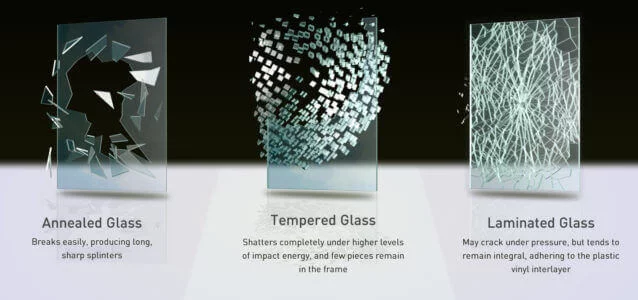
In all these situations, there is a higher probability that the glass will be impacted and shatter. And when annealed (ordinary) glass breaks, it produces long sharp shards that may injure people in close proximity. When any type of safety glazing breaks, it remains relatively harmless.
What creates the difference
The core difference between tempered and laminated glass lies in how they are produced. The technology determines their costs and main features.
Tempered glazing is a single piece of annealed glass. It turns into safety glass after tempering (thermal processing). During processing, the inside layer is subjected to tension, and the outer layer to compression, which results in more durability. Tempered glass features:
Tempered glass features:
- Such glazing is very difficult to break; it’s most vulnerable at its edges.
- When tempered glass shatters, it breaks into inch-size pieces with no sharp edges.
- It cannot be repaired after breaking.
- It offers high wind resistance.
Laminated glazing consists of two glass layers joined together with a plastic layer. Glass layers can be both regular glass and tempered glass. The plastic layer is PVB (or polyvinyl butyral). It is clear, flexible, tough, and adhesive to many materials. When all three layers are heated under pressure, the lamination takes place.
Laminated glazing features:
- It may crack, but its pieces will stick to the plastic layer and remain together.
- It absorbs 95-99% of UV radiation.
- It blocks sounds at higher frequencies (such as a child’s voice or whistle).
- It is possible to repair scratches.
- Its plastic layer can be tinted.
Tempered glazing is several times stronger and less likely to break than laminated glass (and about 5-10 times stronger than regular glass). However, laminated glazing can have a layer of tempered glass, which would make it stronger.
Laminated glass can be 3-4 times more expensive than tempered glass. That is the main reason why laminated glazing has fewer applications in residential buildings.
Uses
Laminated glazing is most commonly used for security in commercial buildings, and tempered glazing is used for safety in houses and apartments.
Thus, laminated glazing is used in doors, walls, and windows of shopping malls and office buildings for both break-in and explosion protection as well as offering high sound insulation. Additionally, because of its excellent protection from ultraviolet radiation, laminated glass is used in glass roofs. Glass floors and railings are also made of laminated glazing. The plastic between the glass panes creates a barrier for both harsh weather and intruders.
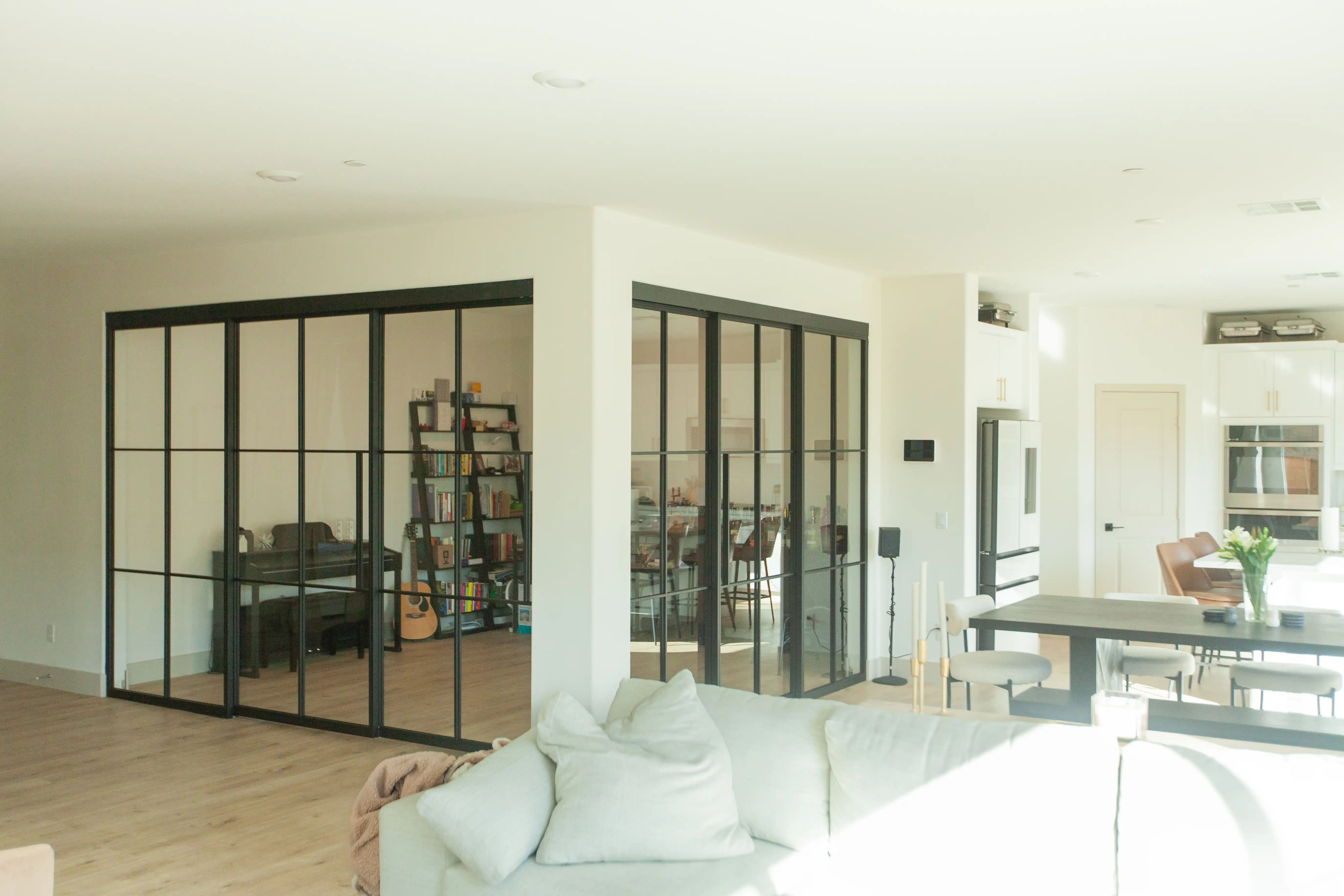
Tempered glazing is used in household doors and large windows, room dividers, storm doors, shower doors, tubs, stairways, and elevators. This is the best choice if you are looking for interior glazing with a high safety level.
And lastly, it may look like safety glass should replace annealed glass everywhere, but remember that it is costly. In most cases, glass in residential windows does not need to be tempered or laminated. Regular glass is an absolutely adequate option.